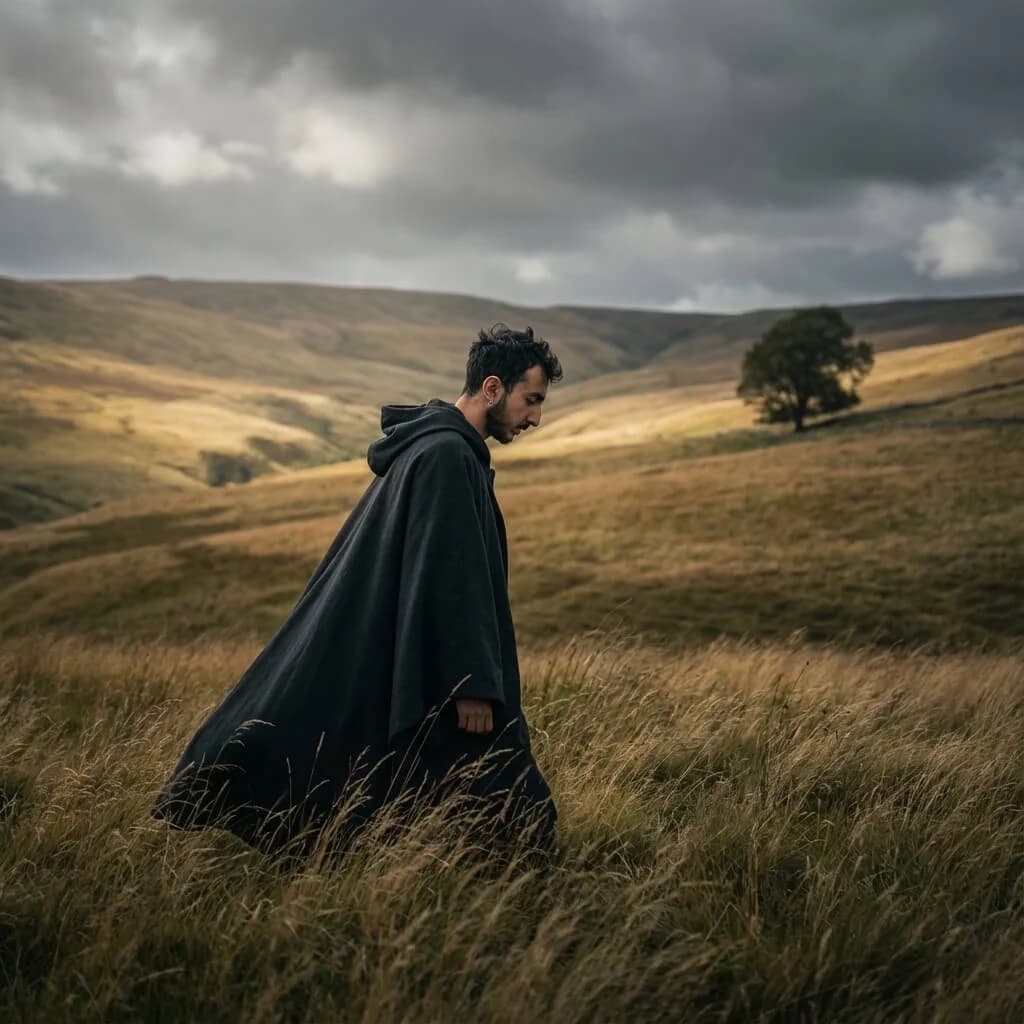
Cinematic Moody Landscape Portrait Prompt - Dramatic English Countryside
How to Generate This Image
Set up your AI model
Access Gemini 3 Pro Image or any compatible AI image generation tool
Configure generation parameters
Use the settings shown in the parameters section below
Enter the prompt
Copy the prompt text below and paste it into your AI tool
Generate the image
Click generate and wait 30-60 seconds for your AI-generated image
{
  "Objective": "Generate a cinematic, high-resolution photographic image description.",
  "Scene_Details": {
    "Setting": "Vast English landscape with rolling golden-brown hills.",
    "Atmosphere": "Moody and atmospheric with dark, brooding clouds.",
    "Lighting": {
      "Description": "Soft, diffused sunlight breaking through clouds creating illuminated patches.",
      "Mood": "Realistic, cinematic, natural contrast with subtle color grading."
    },
    "Vegetation": "Tall, wind-swept grass reaching the man's knees.",
    "Background_Elements": {
      "Tree": "A solitary tree on a distant ridge to enhance scale and isolation."
    }
  },
  "Character_Details": {
    "Description": "Lone man walking through the landscape.",
    "Movement": "Walking slowly through tall grass; cloak flowing slightly.",
    "Clothing": "Long, dark medieval-style cloak or hooded coat.",
    "Posture": "Upright but contemplative, head slightly lowered.",
    "Face": {
      "Visibility": "Partially visible in profile.",
      "Features": "Rugged features, neatly trimmed beard.",
      "Hair": "Short textured hair with modern fade; closely cropped sides; longer, tousled top."
    }
  },
  "Stylistic_Instructions": {
    "Tone": "Cinematic, dramatic, solitary.",
    "Color_Grade": "Earthy ochres and cool greys.",
    "Mood": "Epic scale with emotional central focus on the figure.",
    "Restrictions": [
      "No text, logos, or visible writing in the frame."
    ]
  },
  "Technical_Specifications": {
    "Camera": "Professional DSLR.",
    "Lens": "Wide-angle lens to capture grandeur while centering subject.",
    "Aspect_Ratio": "1:1",
    "Resolution": "High-resolution photo-quality output."
  }
}AI Model
Gemini 3 Pro Image
Source
https://x.com/rovvmut_/status/1994234346493108690Generation Parameters
Tags
Metadata and Statistics
About the Author
Frequently Asked Questions
What makes a good cinematic landscape portrait?
A great cinematic landscape portrait balances epic environmental scale with intimate human focus. Key elements include: dramatic atmospheric conditions (stormy skies, breaking light), a solitary or small number of figures that create emotional anchor points, wide-angle composition that captures grandeur while maintaining subject prominence, moody color grading with subtle tones, and careful attention to how character and environment interact to tell a visual story. The landscape should complement rather than overwhelm the human element.
How do you create atmospheric mood in landscape photography?
Atmospheric mood comes from combining weather conditions, lighting quality, and color grading. Use dramatic cloud formations (storm clouds, breaking light, fog, mist) for visual drama. Capture soft, diffused lighting that creates contrast without harsh shadows—especially light breaking through clouds or fog. Apply subtle color grading that emphasizes mood (cool greys for melancholy, warm ochres for nostalgia). Include environmental elements like wind-swept grass or flowing fabric to show movement and atmosphere.
Why combine medieval clothing with modern styling?
Combining medieval elements (flowing cloaks) with contemporary details (modern haircut, trimmed beard) creates a timeless, relatable aesthetic that prevents images from feeling costumey or purely historical. This approach is popular in modern fantasy book covers and editorial photography because it speaks to contemporary audiences while maintaining fantasy or epic elements. It signals 'timeless story' rather than 'historical reenactment,' making the image feel current and emotionally accessible.
What camera settings work best for epic landscape portraits?
Use wide-angle lenses (24-35mm on full frame) to capture landscape grandeur while keeping subjects prominent. Shoot at f/8-f/11 for depth of field that keeps both subject and landscape reasonably sharp. Use lower ISO (100-400) for clean image quality. Slightly underexpose to preserve cloud detail, then lift shadows in post-processing. Shoot RAW for maximum color grading flexibility. Time shoots for dramatic lighting conditions—early morning, late afternoon, or during weather transitions.
How do you balance epic scale with intimate character focus?
The key is composition and lens choice. Use wide-angle lenses to capture expansive landscapes while positioning the subject large enough in frame (typically filling 1/3 to 1/2 of the vertical height) to remain the focal point. Place subjects using rule of thirds or golden ratio for visual interest. Use landscape elements (hills, trees, paths) as leading lines that guide eyes to the figure. The environment should provide context and mood while the character provides emotional entry point for viewers.
What makes rolling hills better than dramatic mountains for this style?
Rolling hills provide gentle, contemplative scale that complements rather than competes with the human figure. Their softer curves create natural leading lines and elegant composition without the aggressive drama of mountains. Hills feel ancient, timeless, and meditative—perfect for introspective, contemplative moods. They're less visually busy than mountains, allowing atmospheric elements like clouds and lighting to play a stronger role. This creates that 'epic yet intimate' balance that defines great landscape portraiture.
How can I customize this prompt for different landscapes?
Keep the core structure (solitary figure, dramatic weather, flowing cloak, atmospheric lighting, wide-angle composition) while changing terrain: Scottish highlands for more dramatic peaks, Icelandic plains for stark minimalism, Mediterranean hills for warmer tones, coastal cliffs for ocean elements, forest clearings for more enclosed intimacy, or desert landscapes for harsh isolation. Adjust color grading to match environment (cooler for northern climates, warmer for Mediterranean, desaturated for Nordic), and modify weather conditions to suit the landscape type.
What are the best use cases for this photography style?
This style excels in: fantasy and literary fiction book covers (creates mood and suggests character depth), album artwork (provides atmospheric emotion without being too literal), editorial photography (dramatic visual impact with human interest), character study portfolios (demonstrates environmental portrait skills), fantasy and adventure genre marketing (hits archetypal notes without clichés), contemplative or philosophical content illustration, and any project requiring that balance of epic natural beauty with human vulnerability and introspection.
Share this prompt
Share this prompt on social media or copy the link to share with friends