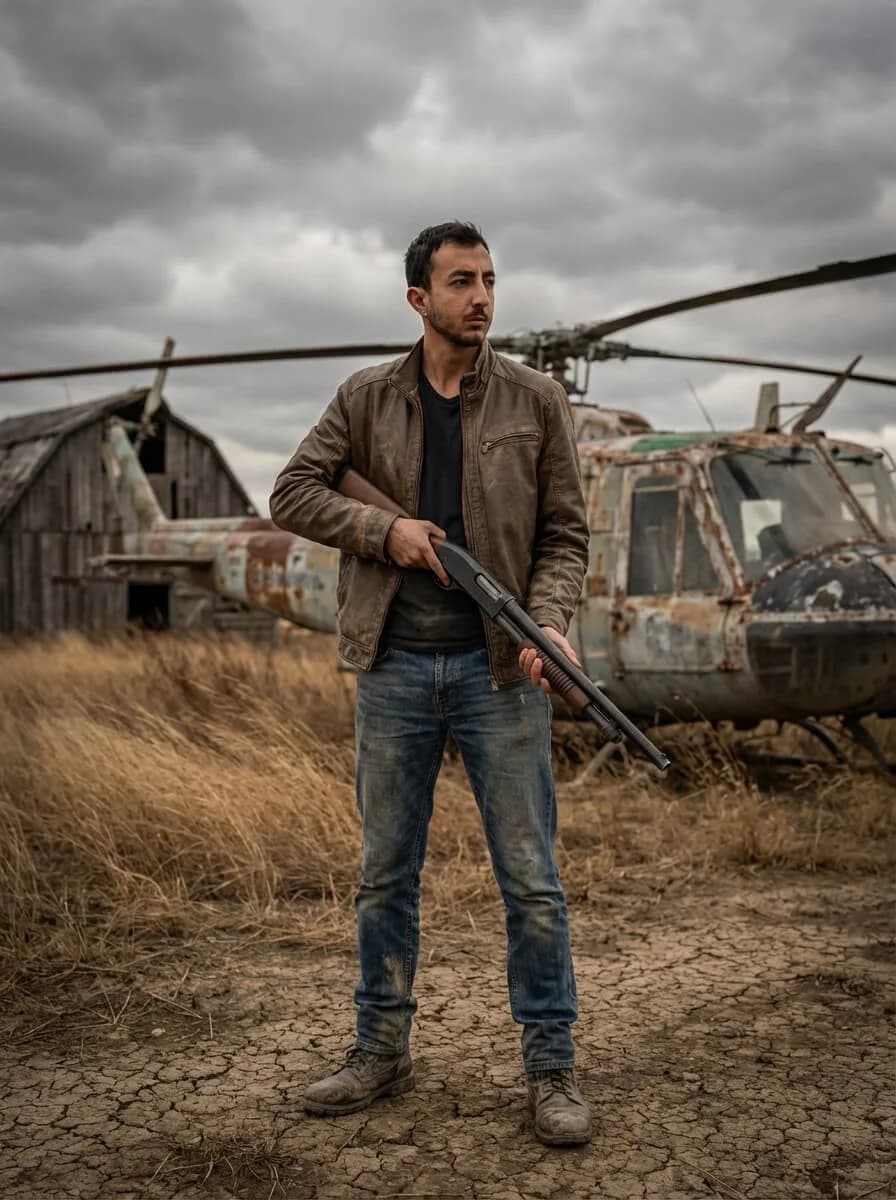
Post-Apocalyptic Portrait Prompt - Cinematic Survival Character Photography
How to Generate This Image
Set up your AI model
Access Gemini 3 Pro Image or any compatible AI image generation tool
Configure generation parameters
Use the settings shown in the parameters section below
Enter the prompt
Copy the prompt text below and paste it into your AI tool
Generate the image
Click generate and wait 30-60 seconds for your AI-generated image
Prompt
Cinematic full-body portrait of a rugged man holding a shotgun, standing beside an old, rusted helicopter in front of a weathered wooden building on an abandoned farm. The ground is dry and cracked, tall brown grass sways in the wind, and the sky is overcast with dramatic gray clouds. The man’s clothes are dusty — a worn leather jacket, jeans, and boots. Faded paint and rust streaks cover the helicopter’s body. The atmosphere feels tense and post-apocalyptic, with cinematic lighting and soft depth of field.
AI Model
Gemini 3 Pro Image
Source
https://x.com/rovvmut_/status/1991828763978637624Generation Parameters
Tags
Metadata and Statistics
About the Author
Frequently Asked Questions
What makes effective post-apocalyptic character design?
Effective post-apocalyptic character design balances practical survival elements with visual storytelling. Key components include: weathered, functional clothing (leather jackets, durable jeans, boots) showing authentic wear, props that serve survival purposes (weapons, tools, gear), environmental interaction (dust, dirt, wear matching the setting), alert but not aggressive posture suggesting constant vigilance, and details that suggest backstory (specific wear patterns, particular equipment choices). The character should look like they've genuinely survived harsh conditions, not like they're wearing a costume.
Why use rusted vehicles and industrial decay in apocalypse scenes?
Rusted vehicles and industrial decay serve multiple narrative purposes: they establish timeline (rust and decay take years, showing time has passed since the collapse), they represent lost civilization (helicopters, vehicles, and infrastructure that no longer function), they provide visual interest and composition anchors (large recognizable objects creating scale and context), they suggest backstory (military helicopters imply different scenarios than civilian vehicles), and they create that authentic apocalyptic atmosphere through realistic weathering. These elements are visual shorthand for 'society has fallen.'
How do you create authentic post-apocalyptic atmosphere with lighting?
Post-apocalyptic atmosphere requires specific lighting choices: overcast gray skies create oppressive, uncertain mood rather than hopeful clear blue, soft diffused lighting suggests harsh environmental conditions without being overly dark, subtle directional light adds drama and dimension without happiness, slight underexposure creates serious tone, and limited color temperature warmth (cooler overall) suggests harsh conditions. Avoid harsh shadows or bright sunlight which feel too optimistic. The lighting should feel naturalistic but emotionally weighted toward tension and uncertainty.
What landscape elements make apocalyptic scenes believable?
Believable apocalyptic landscapes combine multiple environmental indicators: cracked, dry earth suggesting drought or environmental catastrophe, dead or dying vegetation (brown grass, dead trees) showing ecosystem collapse, abandoned but recognizable structures proving civilization once existed, natural overgrowth reclaiming human spaces, visible weathering and decay on all man-made objects, dramatic weather (storm clouds, harsh conditions), and absence of any current human activity. These elements together create world where nature persists but human civilization has failed.
How should weapons be positioned in survival character portraits?
Weapons in survival portraits should appear functional, not aggressive or theatrical. Best practices: held in ready position but not aimed (suggesting constant vigilance without immediate threat), positioned naturally as if carried regularly (not freshly picked up for photo), showing appropriate wear matching the environment, sized and typed realistically for the character and scenario, and integrated into overall composition without dominating. The weapon should suggest necessity (danger exists) and capability (character can handle threats) without glorifying violence or appearing costume-like.
What clothing details make post-apocalyptic characters authentic?
Authentic post-apocalyptic clothing shows: specific wear patterns at stress points (elbows, knees, shoulders, collar), dust and dirt accumulation that matches the environment, color fading from sun exposure, repairs or modifications suggesting long-term use, layering for practical temperature management, functional rather than fashionable choices, and consistency across all pieces (everything should show similar age and wear). Avoid pristine 'distressed' clothing that looks deliberately aged—authentic survival wear shows genuine use patterns and environmental exposure.
How can I customize this prompt for different apocalypse types?
Keep core structure (armed survivor, abandoned location, industrial decay, dramatic sky, cinematic composition) while changing specifics: Nuclear winter—add snow, ash, darker skies, radiation gear; Zombie apocalypse—more immediate damage, defensive positioning, closer threats; Climate catastrophe—extreme weather indicators, flood or heat damage; AI/tech apocalypse—technological debris, modern ruins, tactical gear; War aftermath—military vehicles, fortifications, battle damage. Adjust clothing, props, environmental details, and color palette to match while maintaining the tense survival atmosphere.
What makes post-apocalyptic imagery work for game art and book covers?
Post-apocalyptic imagery succeeds commercially because it: instantly communicates genre to audiences (recognizable visual language), suggests specific story themes (survival, resilience, human nature), creates emotional engagement (tension, curiosity about backstory), provides rich environmental storytelling (world details without exposition), allows character focus while showing context (both protagonist and setting visible), and taps into contemporary cultural anxieties making it relatable. The aesthetic is immediately recognizable while allowing variation in specific apocalypse type, making it versatile for different narratives within the survival genre.
Share this prompt
Share this prompt on social media or copy the link to share with friends